“I guarantee I have the best food in town” – From Lamont Cafe to the Annalope
by Randy Tucker
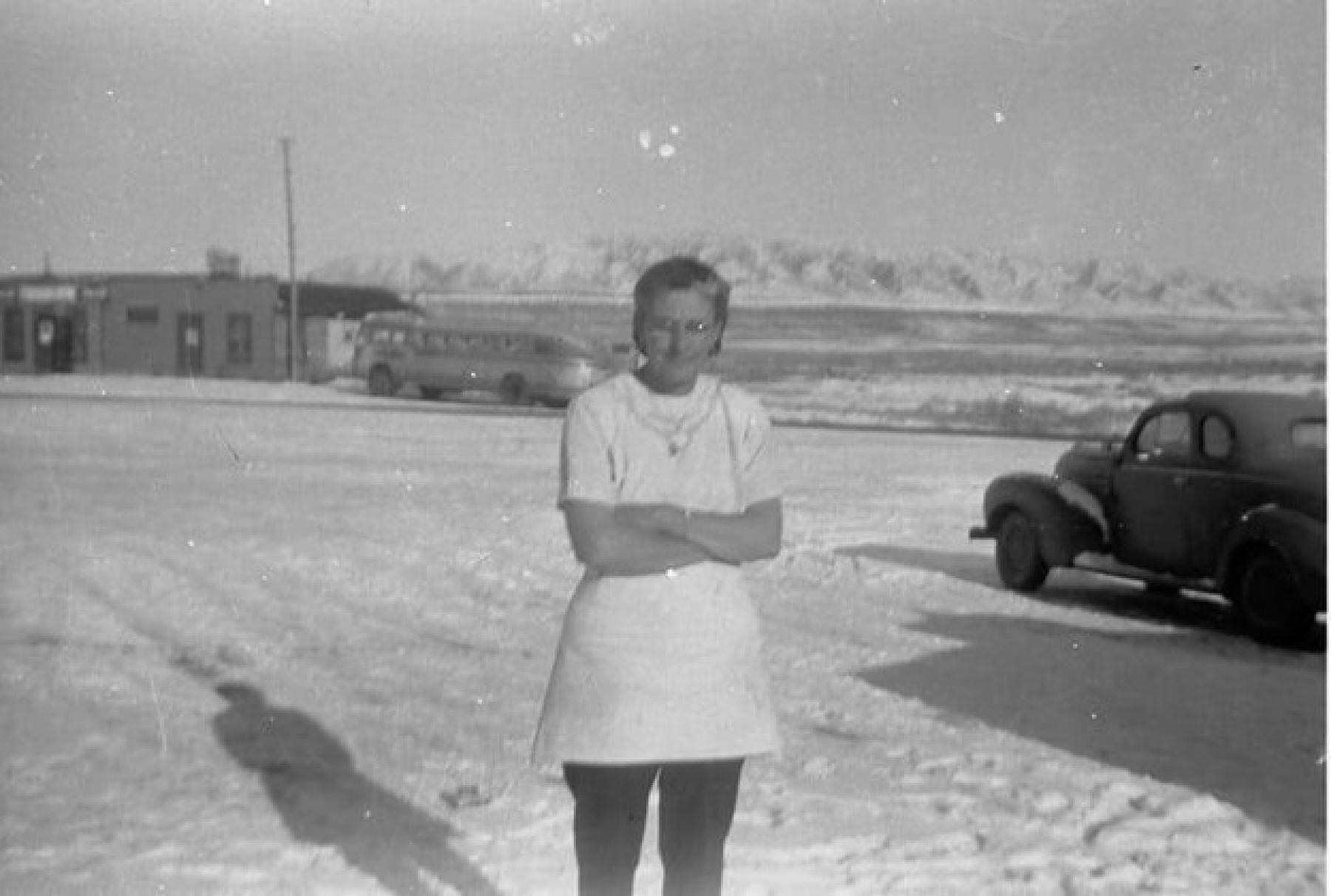
The Wind River FFA judging team left the high school parking lot at Morton just after 5 am. The October sun was just peaking over the horizon. Two hours later, they pulled into Grandma’s Café in beautiful downtown Lamont, Wyoming. The advisor had called ahead, and Violet Cox had 22 identical orders of bacon, two eggs, hash browns and toast ready for the kids.
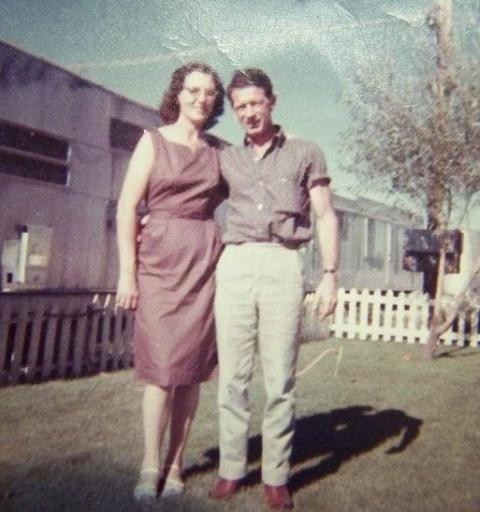
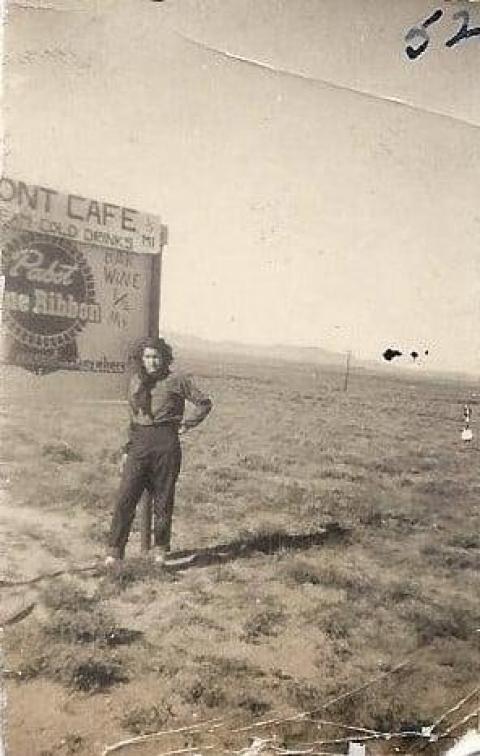
It was just another morning in Lamont, at an iconic café that changed it’s name three times, from the Lamont Café, to Grandma’s Café and finally, the Annalope Café.
Wyoming Reporter – December 14, 1926 –“Tom Livingston is spending this week at James Lamont’s place north of Rawlins remodeling some buildings, building a new store and moving the gas station from its present location to Rawlins-Casper highway where Mr. Lamont will conduct his business in the future, thus making it much more convenient for tourists and residents of Bairoil than where it is now located.”
Like much of rural Wyoming, improved highways, faster cars and other technological advancement spelled the demise of Lamont. The remnants of the little town are 33 miles north of Rawlins, with another 10 to the junction at Muddy Gap. At Muddy Gap it’s 81 miles to Lander or 88 to Casper. Five miles to the west of Lamont is Bairoil.
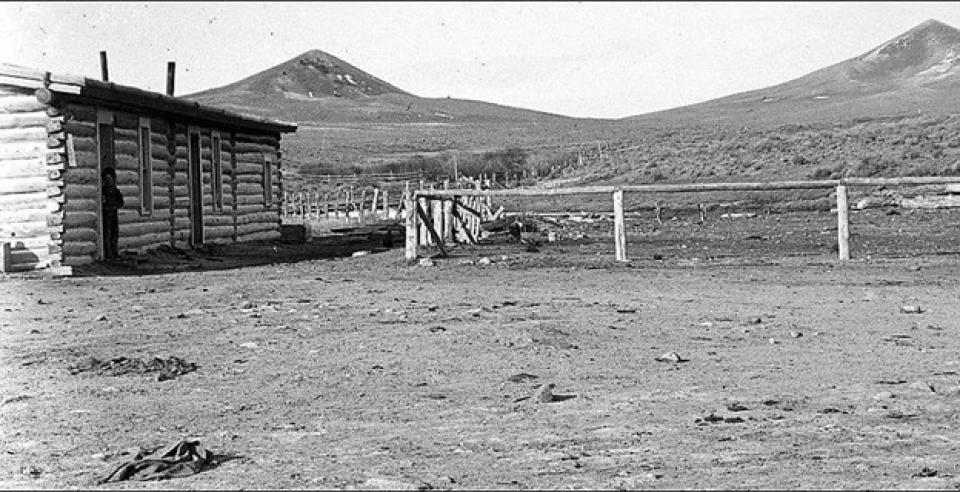
This is a historic area. A few miles west of Bairoil was the stage and freight station at Lost Soldier, a welcome sight for travelers heading northwest from Rawlins to Fort Washakie in the late 19th and early 20th centuries. Crossing Separation Flats from Belle Springs, travelers had a break at Bull Springs and then Lost Soldier.
The economy of 20th century Lamont depended on travelers as well.
In 1889, James “Jimmie” Finley Lamont arrived on the Union Pacific in Rawlins. James was an orphan from Braemer, Scotland. He was just 14 years old. James homesteaded the T Lazy T Ranch on the southeast end of the Ferris Mountains in 1913. In 1918, he founded the town of Lamont.
James came to America to find his mother Maggie Farquharson who lived with her brother John in Kearney, Nebraska. She had left five-year-old James with her sister Anne Farquarson, James' aunt. James took his middle name from his aunt’s husband, whose last name was Finley.
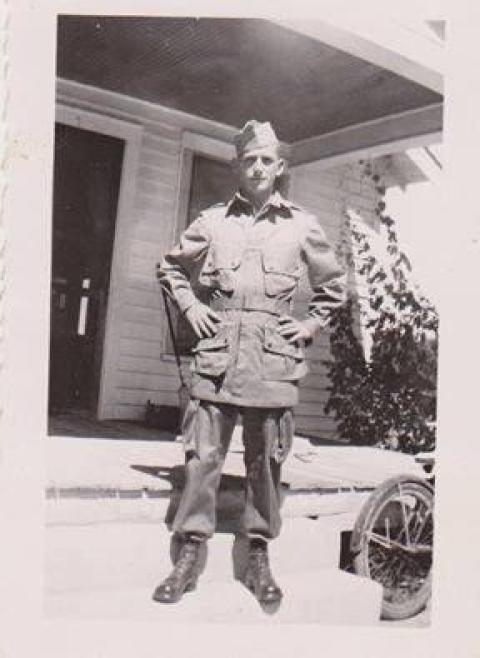
James Finley Lamont, Jr. was the oldest son of the family and by tradition, the eldest son always takes the father’s name. James Jr.’s son is also named James.
James Sr. passed on August 5, 1950.
His wife Jensena Pedersen Lamont was born in Denmark in 1885, in a large family with eight brothers and sisters. She passed at age 63 in Riverton in 1948.
James Sr. was a sheep rancher, and an innovator bringing one of the first windmills to south-central Wyoming. He wasn’t a shopkeeper, but he ran a store on the ranch. Jimmie drove into Rawlins to pick supplies and restock his store.
It was the beginning of a series of small stores, service stations and cafes in later years at Lamont.
The area remains starkly beautiful in its desolation. An image from a diary written almost two centuries ago remains accurate from a location just 25 miles to the north.
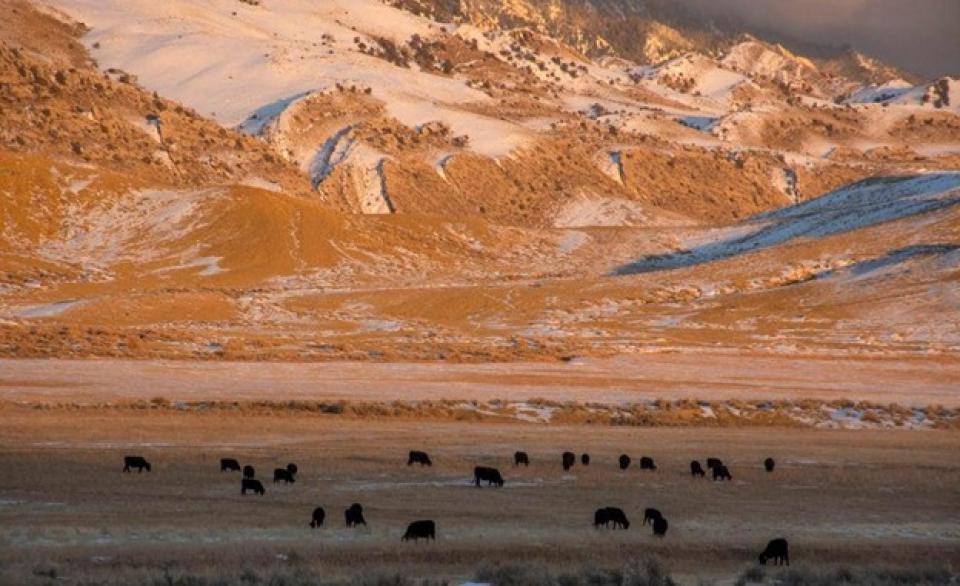
“Smoky but the sun rose over the eastern mountains in its usual majesty. Some recent signs of a war party of Indians ware discovered yesterday which caused some uneasiness…rolled up the stream on the south side… the most rugged bare granite rocks lay along the north side close to the water…saw some fine herds of ibex or wild sheep, some of which were taken and found to be very fine eating…this region seems to be the refuses of the world thrown up in the utmost confusion.” – James Clyman, written at Split Rock, Wyoming, on August 17, 1844.
Personalities in Carbon County were aggregating at Lamont.
Jimmie Lamont was born in Scotland. Many other nationalities that immigrated to the United States at the end of the 19th and in the first two decades of the 20th century were perplexed and frustrated by the Volstead Act that made alcohol illegal. What the act did was opposite of the intent, it made common citizens criminals and created an entirely new “underground” business, bootlegging.
Jimmie Lamont was heavily engaged in the whiskey distilling business maintaining several large stills around Lamont one of which was southwest of his T Lazy T Ranch. Jimmie hid the still in a dugout cave, covered by greasewood.
He worked with a man named Lynch Tom Ryan, who had large hidden operations in the Ferris Mountains area and around Whiskey Peak.
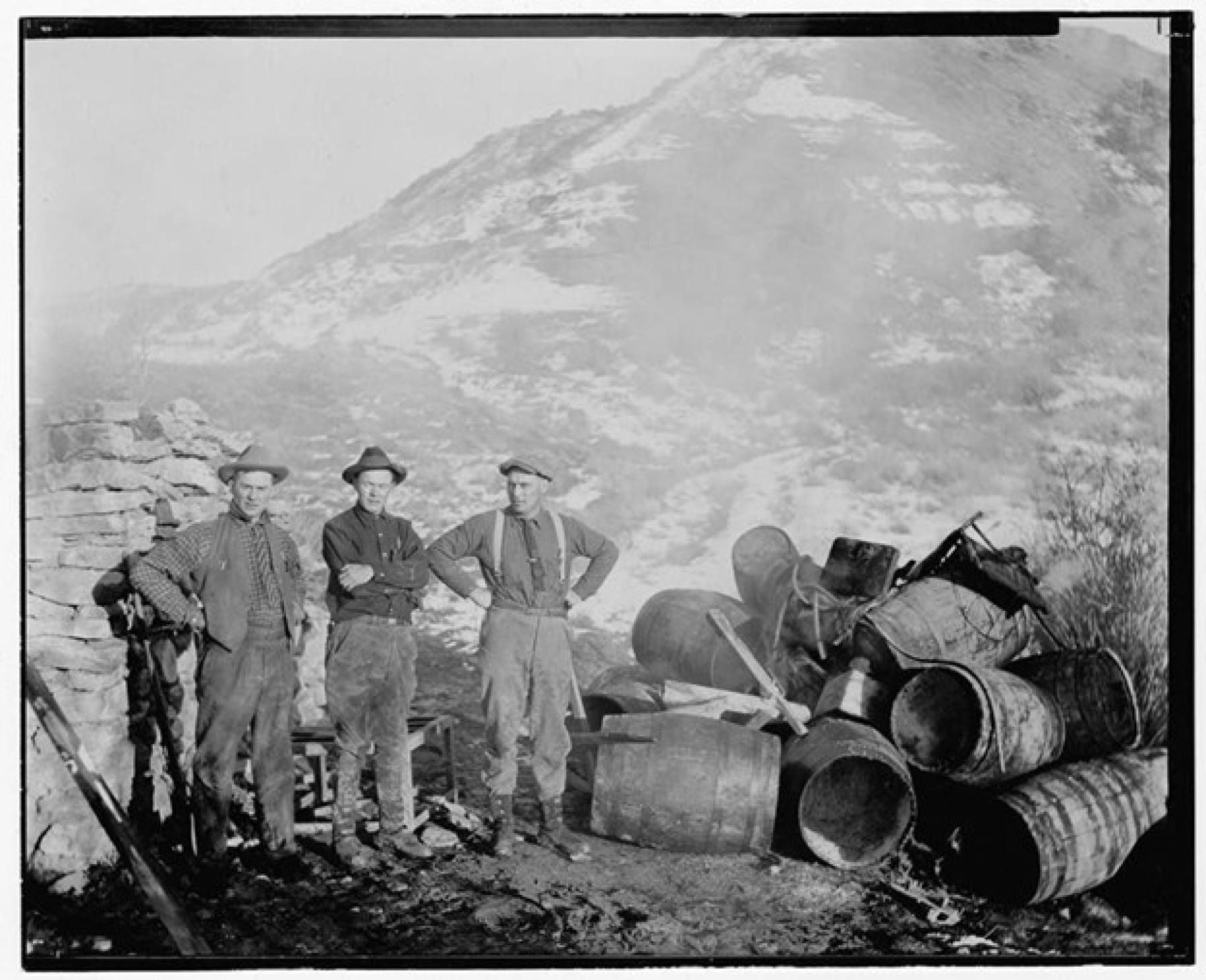
They warehoused the liquor in Lamont and shipped it to Casper where it was stored at the Midwest Refining Barrel Warehouse before being shipped east on the Chicago North Western railroad.
Jimmie was never charged, but his wife Jensena was arrested in a raid. Someone tipped off federal authorities and a story that first appeared in the Cheyenne Tribune on November 12, 1924 went statewide.
CASPER VIOLATORS INCLUDED IN NINE FINED IN FEDERAL COURT
“CHEYENNE, Wyo., Nov. 12. “Nine written pleas of guilty of violation of the federal prohibition law were presented to Judge T. Blake Kennedy, in the United States court for Wyoming here, and sentences were pronounced as follows: Todd Morrison, Natrona county, $200 fine; Nick Battisti, Lincoln county, $125 fine; Will F. Mills, Natrona county, $200 fine; T. H. Baysinger, Natrona county, $150 fine; Jensina Lamont, Rawlins, $150 fine; Don Darnaby, Evanston, $200 fine; Ber Long, Lincoln county, $100 fine; Lola Watson, Natrona county, $150 fine. Fred Steffens of Cheyenne entered a personal plea of guilty of violating the liquor law and was fined $150. The Steffens and Long fines were paid; the other defendants were committed to jail.”
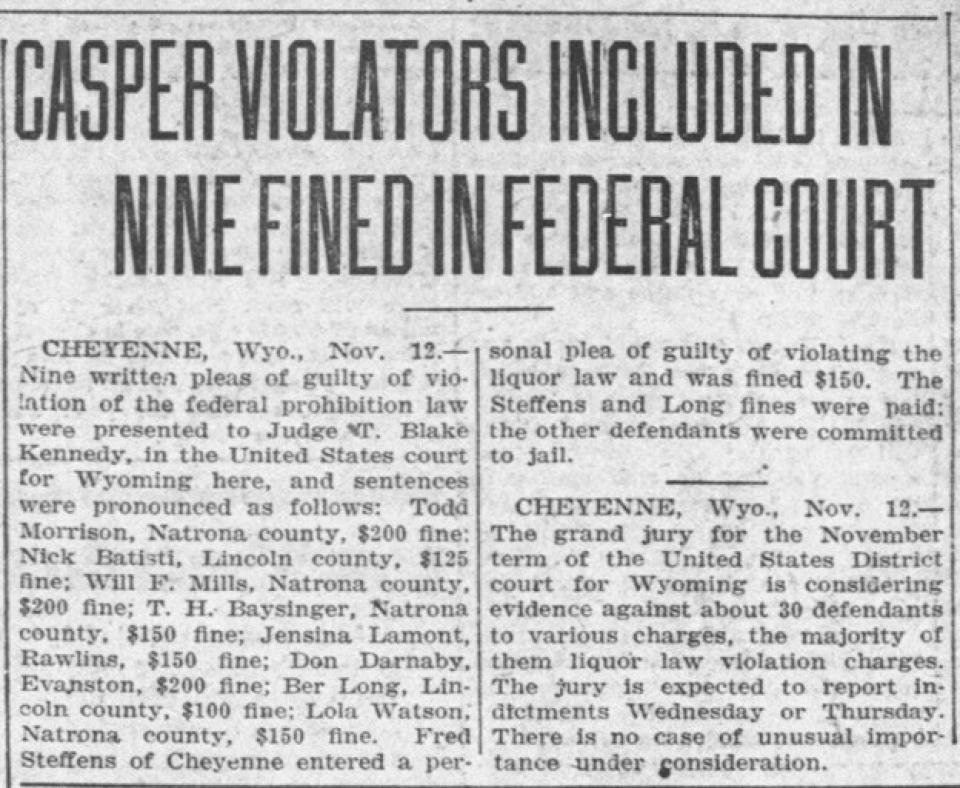
Jensena Lamont spent a few days in the Natrona County Jail in Casper before her fine was paid.
33 miles south in Rawlins, Alget Hall, Sr. was an undertaker and funeral director who worked throughout Carbon County, from Muddy Gap, to Baggs, along with Encampment, Saratoga, Hanna and Lamont, all the way to Split Rock.
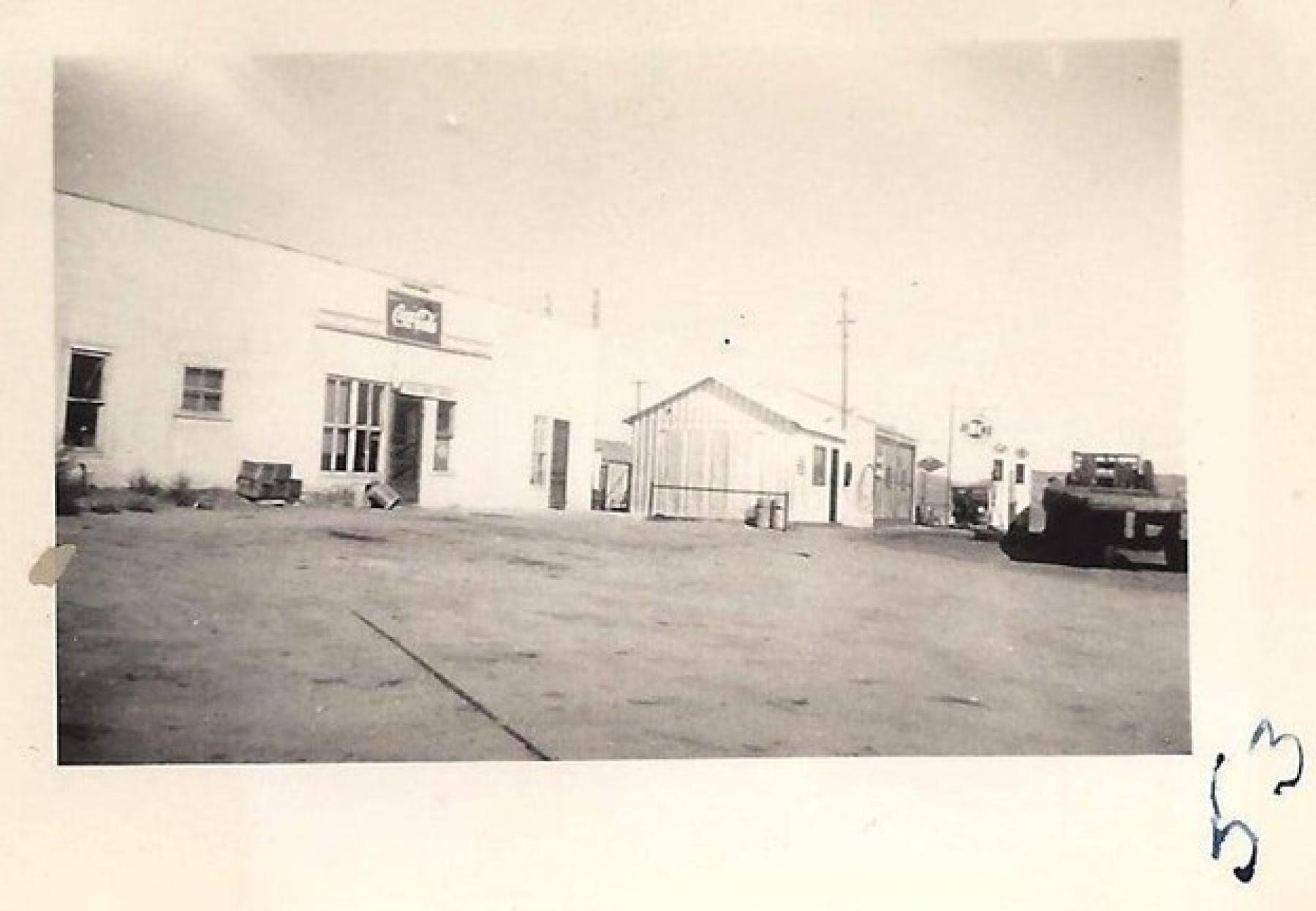
His son, Alget Hall, Jr. was born on May 3, 1927, in Rawlins. He returned from service in World War II where he was a paratrooper fighting the Italians and Germans in Italy. Roads were improving, oil companies were drilling around Lamont, Bairoil and Muddy Gap and traffic between Rawlins and Casper and Rawlins and Riverton and Lander was expanding with the sudden economic burst of the post-war years. Alget saw an opportunity in Lamont. He built a gas station, bar, mechanics station, a small group of cabins and a convenience store, one of the first in Wyoming.
Friends all joked that Alget “owned” Lamont.
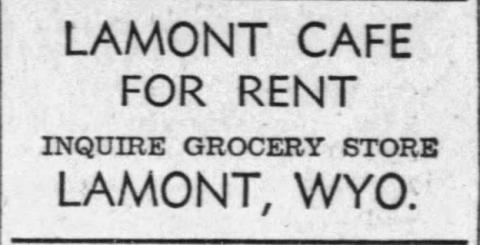
The café was simply called the Lamont Café until years later when it became “Grandma’s Café” and finally, the “Annalope Café”
Several women operated the café from the post-war period, until it closed permanently in 2015. The location was superb for an isolated rural restaurant. So was the fare served by most of the women running the café.
Stories about Lamont almost always revolve around the food, hospitality along with a combination of the treacherous conditions. Many travelers were stranded by blizzards, spending several days waiting for snowplows to open the roads and gradually eating all the supplies at the café.
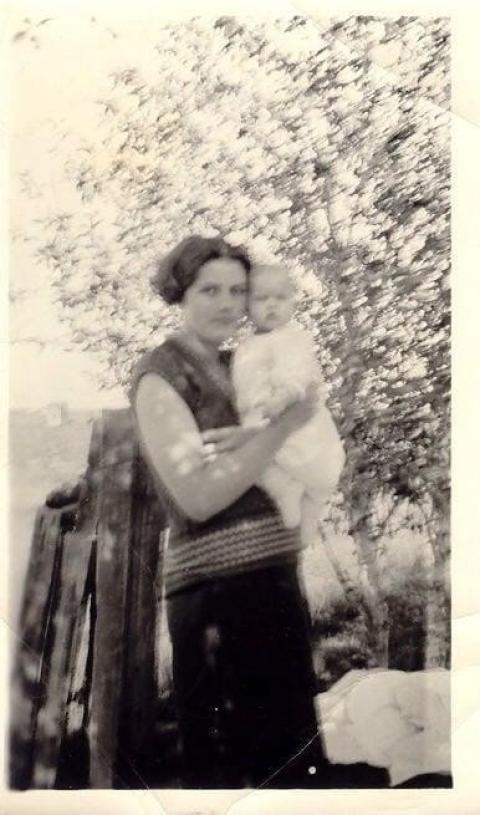
Elizabeth May Knuth owned and operated. She was born in Saratoga on December 28, 1906, to James and Hannah Cornell. She married Victor Vincent Knuth and they moved to the West Coast to work in the shipyards during World War II. Elizabeth was an accomplished cook, with four children. She worked as a chef at a hotel on Jantzen Beach, an island in the mouth of the Columbia River between Portland, Oregon and Vancouver, Washington.
After the war ended Vic and Elizabeth moved their family back to Lamont. Elizabeth opened Grandma’s Café at Lamont, thrilling guests with her flavorful cooking.
The little café with the huge gravel parking lot out front quickly became a favorite of truckers hauling freight between Rawlins, Casper, Lander, and Riverton and with the huge influx of tourists that began to travel to Jackson Hole, Cody and Yellowstone in the post-war period.
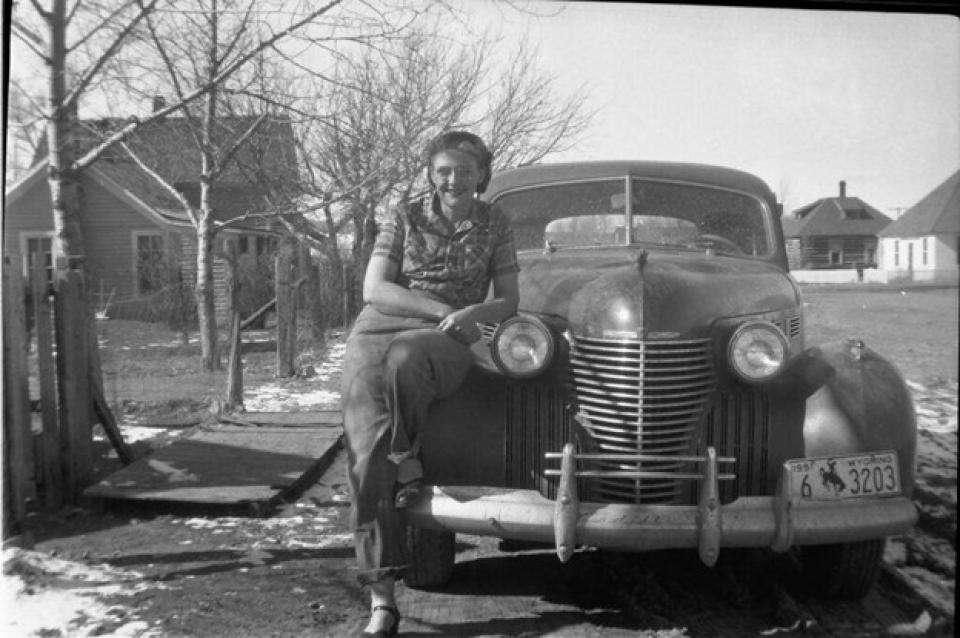
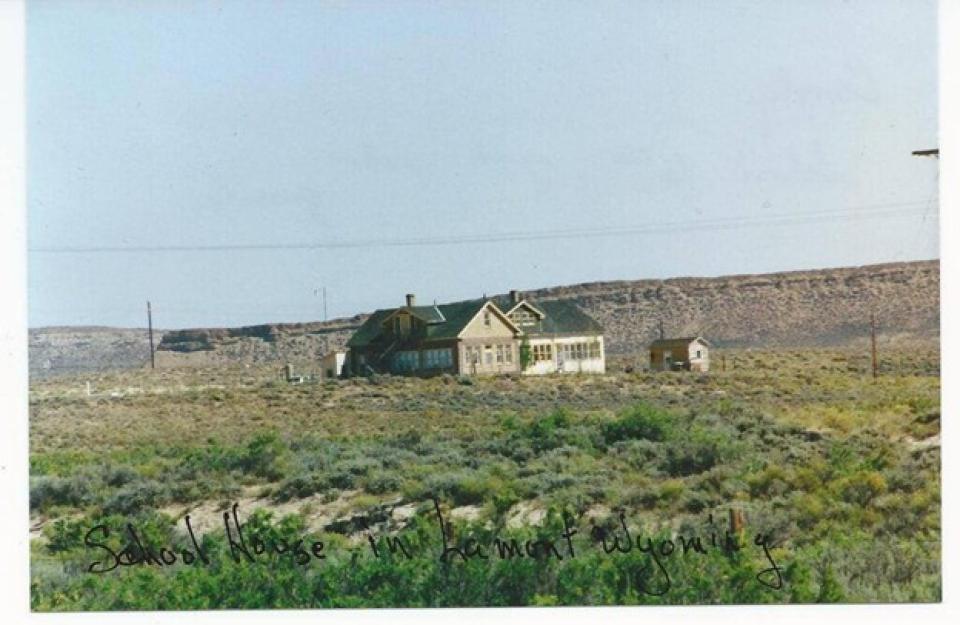
Their four children attended elementary school at Lamont. The original school building, built in 1933, burned down but was rebuilt in 1956 and remains today as a decaying relic.
“In the 1960s the location was owned by Marie Schank and called Grandma’s Cafe. My mom and grandmother both worked for her. My grandmother Violet Cox operated the kitchen and managed Grandma’s Cafe. They also had a fuel station and gift shop at this time,” Dwain Romsa said. “I remember being there several times, age three to maybe eight, or 1966 to 1972 range. Grandma Vi just did basic food services, like burgers, stew, sandwiches, breakfast, etc. Most of the customers worked in the oil fields around Bairoil, and some travelers. It seemed to be a steady business.
The new owners went by Grandma’s for many years. They added steak to the menu and had many customers from Haliburton work crews.”
Alget Hall was tragically killed in 1973. Ironically, his father, Alget Sr. died in an automobile accident near Rawlins in 1937, when Alget Jr. was nine.
“My dad was Alget Hall, who owned most of the Lamont area businesses, the Lamont gas station, Crescent grocery, gas, cafe and motel, and the Lamont bar until his death in 1973. The school was an amazing old schoolhouse at the top of a hill with living quarters above for the caretakers and the biggest slide (not so safe) you’ve ever seen. Just for grades 1-3,” wrote Lois Simon.
Alget was a kind man who was always willing to help someone in need. This trait led to his demise.
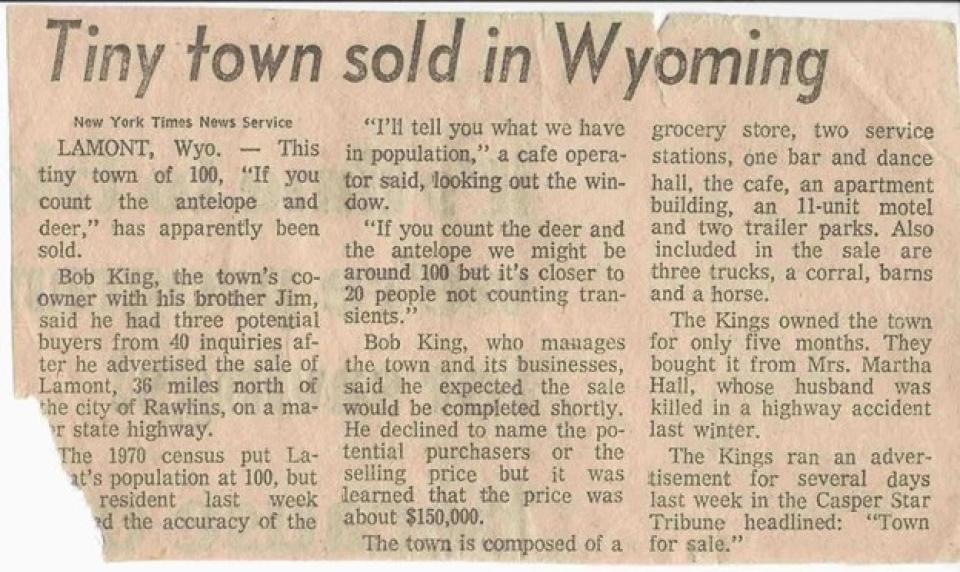
In a heavy snowstorm in 1973 a truck was stuck in a snowdrift on the highway. As Alget tried to pull the truck from the snow a semi-tractor trailer struck him from behind, killing him instantly. His family moved to Rawlins and they sold Lamont to the King’s who then sold it to Richard Forney after just a few months.
“In 1973 we bought Lamont, from Martha Hall which included a horse to ride the gas line. We later sold Lamont as a one horse town. We listed it in Casper Star newspaper with a full page ad “One Horse Town For Sale”. It went viral and was picked up by newspaper syndication and it went national. I was called by numerous talk radio shows to be interviewed. Brother didn’t want to manage it anymore and I decided to sell it because I didn’t want to run it,” wrote Susan King.
Mary Katherine Oliver took over Grandma’s Café.
Mary Katherine Vehar graduated from Rock Springs High School in 1958. She married Charles “Sonny” Oliver and they and their five children moved to Lamont in 1979.
Mary was famous for her home cooked meals and desserts. She enjoyed spending time with her family, working on puzzles, sewing, and crocheting, but her favorite past time was gambling. She ran the café for many years and was a regular stopping point for Haliburton Crews, seismograph crews, bikers, cyclists, ranchers and truckers. She matched her hours to the crew changes on the dozens of oil rigs in the area and was a welcoming host for the roughnecks and company men alike.
|
Image
|
Image
|
One anonymous social media post commented on Lamont in the 1970s.
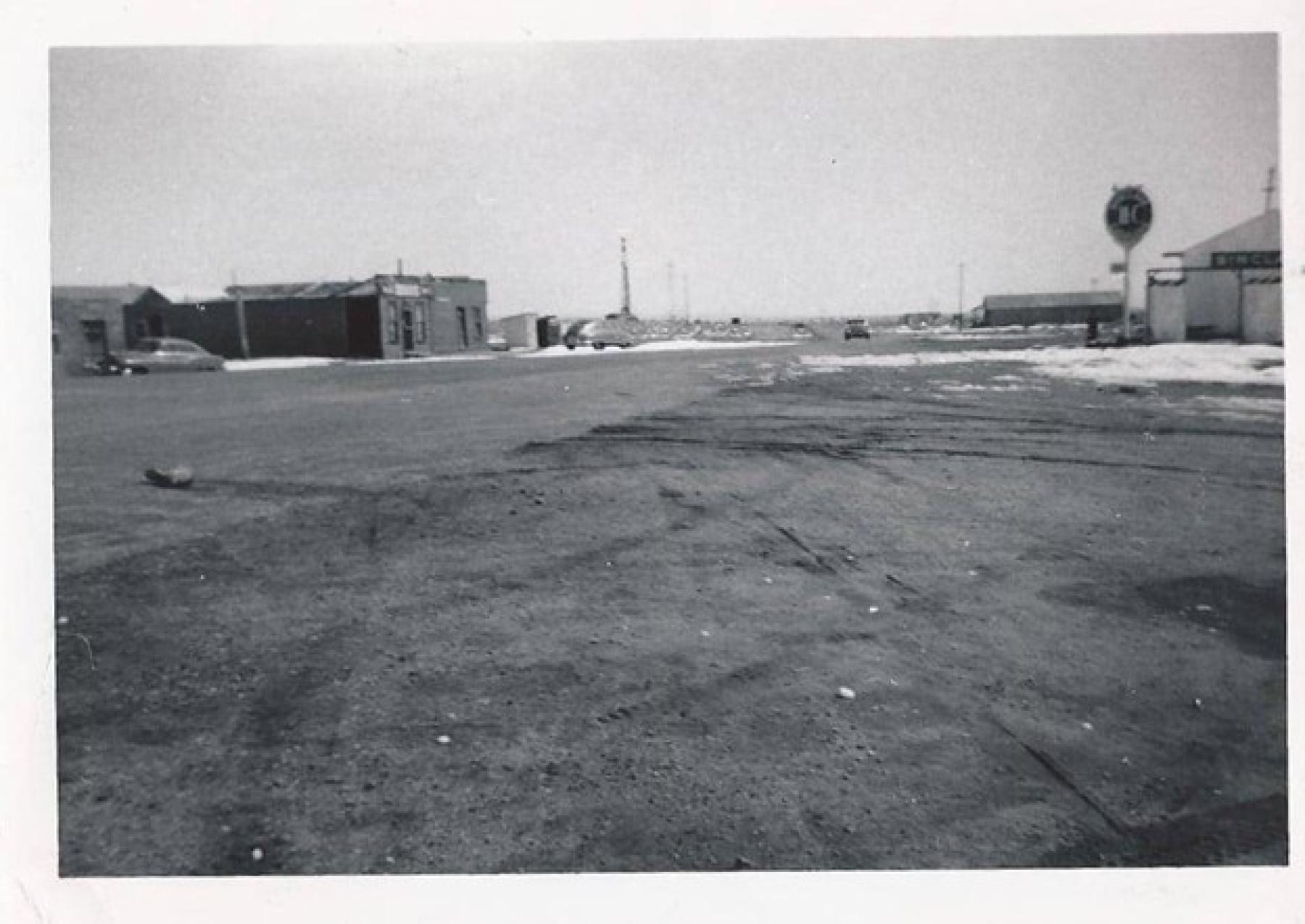
“In Lamont at that time there was the café a store and gas station, which had a post office, a telephone booth outside, a building with a restroom and laundry facilities, and a series of cabins which travelers and visiting workers could rent and stay in, like a motel. When someone would get a phone call the person working at the store would send someone to knock on their trailer and you would go talk on the phone outside in the phone booth. We lived in a trailer house along with the other residents. The population of the town would fluctuate based on the boom or bust of the oil work in the area,”
Many people still have fond memories of growing up, attending school and living at Lamont.
“Lived me a life time right there. Every morning my grandmother would open up my Uncle Alget’s store, and as the sun came up over the mountains, she would tell me, when you see this kind of beauty, well, that is how you know there is a God,” wrote Linda K. Holden
Not all memories were fond ones. The Lamont Store owned by Mary Wilson was a source of fear and angst among local children.
“Mary Wilson’s store. Looks so small now, guess everything looks bigger when you are a kid,” Jerry Caldwell-Zacharias said.
Carolyn Knuth Russell, who lived there when her mom ran the Lamont Café in the 1950s remembers Mary Wilson well.
“Mrs. Wilson used to turn the power off to the cafe and the supplies in the coolers would spoil. She also hid stuff in cans in the store and would not let people get stuff from some of the shelves,” Carolyn wrote.
A cyclist rode through and posted his impression of Grandma’s Café on a touring site.
“It remained dry overnight, and I crawled out of my tent before sunrise. Once I was packed, I strolled into Grandma’s Cafe to be greeted by two truckers, and Grandma herself. It truly is Grandma’s cafe. One old woman ran the whole show in this cluttered place – served, cooked, cleaned – everything. It was awkward because I thought I should be helping her, rather than sitting patiently,” he wrote. “I sleepily gazed up at numerous, framed school-portrait photos of what I could only assume were the grandchildren. I ate a plain omelet, biscuits, and gravy.”
In 2008, Keith Misegades cycled across Separation Flats and stopped at Lamont.
“The funniest thing that happened today occurred during lunch as we rolled into the township of Lamont. The café was called Grandma’s Café and it had a large OPEN sign next to the road. As I rolled up to the door marked Entrance, I asked a pair of motorcyclists whether the food was good. They said it was so we took off our cycling stuff and Rick attempted to go inside and found that the door was locked. It was now 2:25 PM. I tried the door and sure enough it was locked,” Keith wrote. “We sat outside the café and ate what munchies we had with us. We were pretty pissed as it appeared that they served the motorcyclists and shunned the cyclists. The funniest thing was that as we were outside a woman was inside cleaning up. Another funny thing was that there was a sign outside that said, ‘Hospitality Starts Here’. As I left, I made it a point to say out loud, ‘Thanks for the food, it was great’.”
Lamont served locals, workers and regular travelers between Fremont, Natrona and Carbon County, but the Lamont Café and later Grandma’s Café thrived on the tourist trade. There is something irresistible to city dwellers when they encounter a place as remote as Lamont.
“When I worked there silver dollars were still in circulation and we called them “tourist change” we’d get so many they’d overflow the cash register so change was always given in silver dollars rather than paper dollars,” wrote Oscar Hall.
In 1994, Mary Oliver took over Grandma’s Café.
“I guarantee I have the best food in town,” Mary said in a 2008 interview. “Because I’m the only one.”
Grandma Mary, was a real grandmother with five children and over a dozen grandchildren. Her grandson Matthew was only two, she took over the café. As a toddler he was a favorite of regular customers, truckers mostly. They’d share their fries with him and sometimes he’d fall asleep on their shoulders.
Lamont has always been a safe spot on the highway between Rawlins and Muddy Gap. The blizzards that roar in off the Wind River Range to the west routinely close the highway from October to April. The conditions inside Grandma’s Café could become a bit intimate with dozens of people filling the dining room.
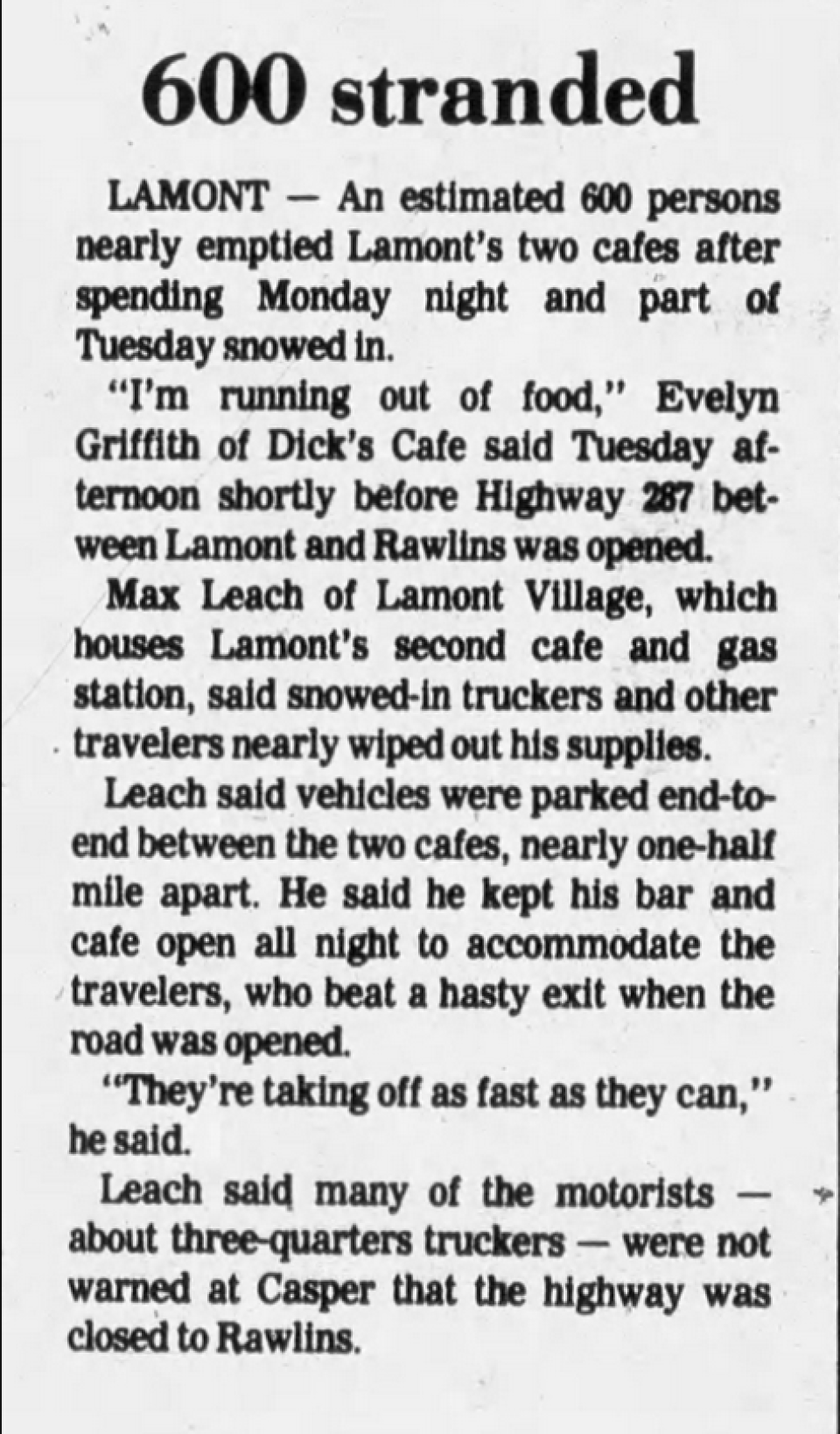
“They’ll get out the cards and start playing,” Mary said. “We’ll all talk.”
When the road closes, Mary leaves the door open, so travelers can come inside no matter the time of day.
She often brought out sleeping bags for her stranded guests to use. She always kept a few cords of firewood outside to keep the furnace going if she had to stay open overnight. The stranded truckers and motorists found a booth, or a spot on the floor and fell asleep.
Mary Oliver kept the café open for a couple of decades. Long past the time she could have retired.
“If you retire, you get old,” she said. “The best part of it is chatting with people.”
Grandma’s Café always offered free coffee when Mary ran it.
Regular customers had their favorite menu items, with many of those at breakfast. Mary brought ham and sausage from Clark’s Meat House in Riverton, with other supplies made on weekly trips to Casper at Sam’s club.
Mary opened most days at 4:30 am and closed a little over 12 hours later, unless there was a storm.
Tebra Morris took over Grandma’s Café when Mary Oliver finally retired. She kept it going until 2012. Business wasn’t as brisk as the old days. Some days she had only a handful of customers. In 2012 she took a job as a rural mail carrier serving the Lamont area, a route of 300 miles, claimed to be the longest in America.
The café closed and in the 13 years since, sand blasted by the desert wind, the extreme cold and heat of Separation Flats and the driving snow of Carbon County’s intense winters have taken their toll on the building.